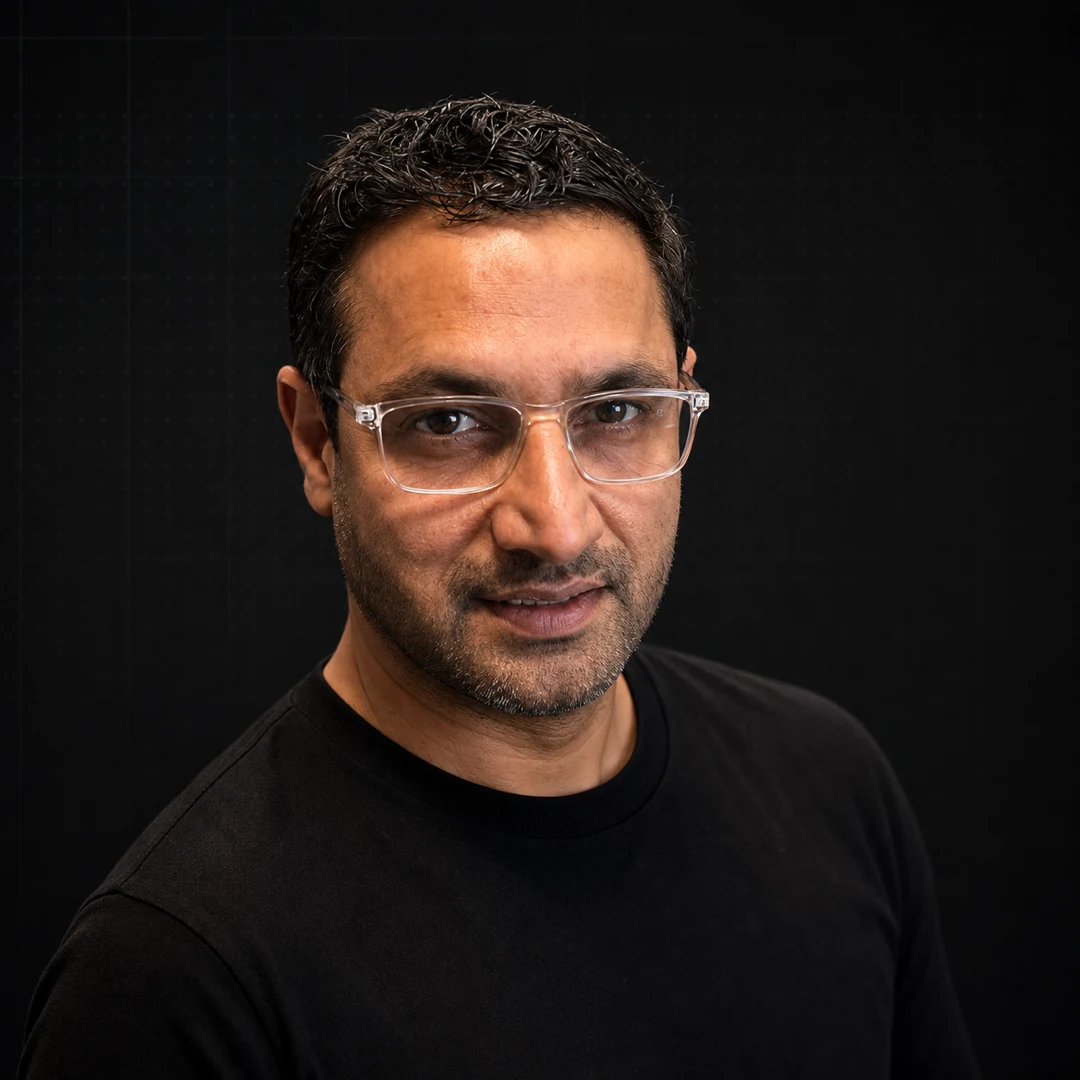
Hey, I’m Vinod.
When I was a kid, I loved those dot-to-dot puzzles. You connect number 1 to 2 to 3, and for a long time it looks like nothing. Just scattered points on a page.
Then somewhere around dot 60 or 70, the picture appears, and you realize every dot was part of it the whole time.
That is the only way I can explain my career.
The scattered dots
For 26 years I kept landing in roles that looked unrelated.
I was a coder, a tech lead, a DevOps engineer doing production support at 2am.
Then I crossed over to the non-tech side: a product manager collecting requirements, a change-management lead getting developers, QA, stakeholders, and clients to actually understand each other.
As a project manager I broke huge projects into milestones, built the plans, owned the tracking and reporting.
Then I learned to write and ship SaaS products.
Then I learned marketing, the thing I had avoided my whole life.
I sat across from corporate managers, directors, VPs, and CIOs.
And I sat across from founders, agency owners, and solo business owners.
For years it felt like wandering. Too many directions. Every time, learning new things and building new skills I would need later.
The picture
Then the picture appeared.
Every one of those roles was a dot in the same image.
The coder who knows what is actually hard to build. The PM who can pull a real requirement out of a vague ask. The project manager who turns chaos into milestones. The translator who makes engineers and executives understand each other. The marketer who knows what makes someone buy.
Most people only ever stand on one or two dots.
They see their corner of the picture. I have stood on nearly all of them. That is not me being versatile for its own sake.
It is the exact reason I can build a thing end to end, where the tech, the process, the people, and the business all have to work together.
Why this matters to you
Your hardest problems do not fit inside one dot.
The process eating your week spans engineering and operations and three people who do not speak each other's language.
You have hired specialists, and each one sees only their piece. The handoffs fall through the cracks between them.
I work in those cracks.
I build agentic systems that run end to end, not tools that demo well in a video and quietly die two weeks later.
Systems that capture, process, and act. Verified work, not fake completion.
One process I rebuilt this way saved $100,000 a year. It used to live in email and copy-paste and someone's memory. Now it runs on something you can trust.
I can do that because I am not looking at your problem through one dot. I have seen the whole picture before.
How I got here, briefly
The short version, so you know the dots are real.
I started with an engineering degree and zero job offers.
Within five years I was at Patni, one of India's largest software companies, named Technical Person of the Year.
Then 26 years building for Lego, Microsoft, 7-Eleven, Wyndham, and hospitals. An enterprise intranet that runs the workday of 100,000 people. Consumer apps with 4M+ active users.
Then, after 12 years in management, I came back to code at 52.
I had quietly accepted that my building days were over. AI coding proved me wrong in a single week.
I have been building every day since.
See the projects I’m working on →
Read my newsletter
Weekly build notes. How I build agentic systems that actually ship, not just demo well. The experiments that worked, the ones that failed, the systems I use, step by step.
Vinod